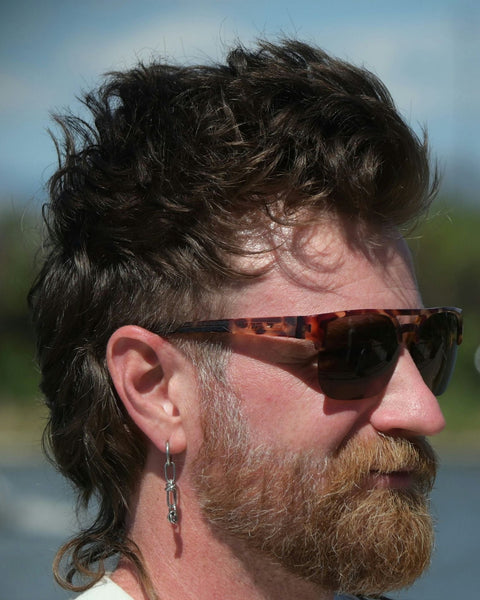
The Old School Mullet Isn't Broken. Your Routine Is
The classic mullet isn't coming back. It never left.
What's changed is how badly most people screw it up.
More than nostalgia.
This is about understanding how hair really behaves.
Most guides show you the cut. They skip what happens two days later—when thick hair puffs out at the sides, the back goes flat, and you're wondering why you look nothing like the photo.
We're breaking down why mullet hairstyles fail after the first wash, what to actually say to your barber, and how to keep the shape without loading up on greasy products.
The Old School Mullet Isn't the Problem
A traditional mullet is simple: short sides, short on top, long back. That's it.
No undercut. No dramatic fades. No overcomplicated layers trying to make it "modern."
The classic version works because it follows your hair's natural growth pattern. Short where hair tends to stick up. Longer back where it naturally falls. Function over fashion.
The problem? Most barbers (and style guides) try to modernize it.
They add disconnects. They fade the sides too aggressively. They treat it like a statement piece instead of a men's haircut.
That's when mullets stop working.
Why the 80s version succeeds.
It's low-maintenance by design. It grows out well. It doesn't require daily styling to look intentional. It works with your hair, not against it.
"Modernizing" usually means making it harder to maintain. And harder to maintain means more product, more fuss, and more days where your hair looks like it's fighting itself.
Why Most Mullets Fail After the First Wash
Here's what nobody tells you: the cut looks great leaving the chair. Give it 48 hours and everything changes.
Thick hair expands. The sides puff out. Suddenly you've got a mushroom cap where your mullet used to be.
Fine hair collapses. The back goes limp. Without the barber's product holding things together, there's no shape left.
Most guys reach for heavier products when this happens. More pomade. More gel. More hold. But that creates greasy roots and a back that looks wet instead of styled.
The issue starts earlier. It starts with what's stripping your scalp in the shower.
Conventional shampoos blast away natural oils every morning. Your scalp panics and overproduces to compensate.
Thick Hair Changes the Rules
🌱 Standard mullet advice doesn't apply to you if you have:
Thick
Dense
Or wavy hair
Thick hair holds bulk. That bulk has to go somewhere.
Without proper thinning, it pushes outward at the sides. The "poofie" effect guys complain about on Reddit? That's bulk, not length.
Most barbers cut for length, not density. They take off inches when they should be removing weight.
The result looks fine initially, but give it a week of natural growth and you're back to dealing with sides that stick out like handles.
The fix isn't cutting the sides shorter
That makes the contrast too harsh and the grow-out phase awkward. The fix is strategic texturising that removes volume without removing coverage.
Here's the other thing: thick hair doesn't need grease. It holds shape on its own when it's healthy. Loading it up with heavy pomades just makes it sticky and prone to buildup.
What thick hair needs is control without coating. Something that guides the shape without sealing everything under a layer of wax.
Curly hair and straight hair each behave differently in a mullet. Curly hair adds volume naturally—sometimes too much.
Straight hair can fall flat without layering to create movement. Know your hair type before you sit in the chair.
Quick Style Map: Mullet Variations
You don't need a 50-image gallery. But understanding the landscape helps you communicate with your barber.
By fade type
A taper fade keeps things gradual and grows out cleanly—best for the classic look.
A burst fade mullet curves around the ear for more contrast. A skin fade goes tight to the scalp and requires more upkeep.
The old school version? Minimal fade, maximum function.
By texture
A curly mullet adds natural volume at the back—less styling needed, more shape control required.
A wavy mullet hits the middle ground: movement without chaos. A shaggy mullet leans into the laid-back, retro vibes. Think rockstar, not corporate.
By length
A short mullet stays tight and professional. A medium mullet offers versatility. A long mullet commits fully—longer hair at the back, more statement, more maintenance.
Adjacent cuts
The wolf cut and shag borrow mullet qualities but add more layers throughout. A curtain mullet parts the fringe down the center.
A mohawk mullet spikes the top. A spiky mullet adds texture up front with an angular fringe.
The modern mullet haircut plays with these variations. The traditional mullet keeps it simple. Neither is wrong (but know which one you're asking for).
Face Shape Matters Way More Than You Think
Not every mullet haircut works on every face shape. Here's the short version:
Oval face
You lucked out. Most mullet styles work. Keep proportions balanced and don't overthink it.
Round face
Add height on top and keep the sides tighter. This elongates. Avoid too much volume at the ears.
Square face
Softer edges help. A shaggy mullet or textured top balances angular features. Avoid harsh lines.
Long face
Add width at the sides. A fuller classic mullet with less height on top keeps things proportional.
Your barber should assess face shapes during consultation. If they skip this step, they're guessing.
What to Say to Your Barber (Exact Language)
⚡The classic lines still work. Use them.
"Short on top. Long in the back."
This establishes the basic architecture. Most barbers understand exactly what you mean. If they start asking about fades or undercuts, that's your signal to clarify: you want classic, not modern mullet.
"Business in the front, party in the back."
Yeah, it sounds dated. That's the point. This phrase communicates that you want something intentional—not ironic.
You're not getting a mullet as a joke. You want a functional haircut that happens to be a mullet.
"Not too short on the sides."
This one matters more than you'd think. Left to their own instincts, many barbers will take the sides too tight.
That creates disconnection and makes the grow-out phase painful. You want the sides blended enough that you're not back in the chair every three weeks.
Additional chair language that helps
Specify fade height if you want one: "low taper," "mid fade," or "no fade—just blend it."
Request texturizing or layering if you've got thick or wavy hair.
Bring reference photos. Screenshots from your phone beat verbal descriptions every time.
If your barber pushes back on any of these—if they try to upsell you on a "cleaner" version or suggest blending into a skin fade—consider it a red flag. They're trying to turn your cut into something else.
Don't Find a Good Barber. Find a Real One
A "good barber" knows trends. A real barber knows hair.
Here's how to tell the difference.
Watch before you book
Spend twenty minutes in the shop. Do they spend time consulting with clients, or do they start cutting immediately? Do finished cuts look natural, or do they all look the same?
Ask about grow-out
A real barber thinks about what happens in week three, not just what happens in the chair. If they can't explain how the cut will evolve, they're thinking in photos, not reality.
Check their reaction
When you say "classic mullet," do they nod and ask about your hair type? Or do they immediately try to steer you toward something "more modern"?
The first is a barber who listens. The second is a barber who's going to give you what they want, not what you asked for.
Look at their tools
Clippers, razor, scissors—different tools for different techniques. If they reach for the same tools on every client regardless of hair type, that's a one-trick shop.
Look at their own hair.
This sounds superficial, but it isn't. Barbers who care about craft usually show it. If their hair looks like it hasn't been thought about, their work probably reflects that.
The goal isn't finding someone famous or expensive. It's finding someone who understands that a mullet is a real haircut with real maintenance requirements—not a trend to be interpreted.
The No-Fuss Mullet Maintenance System
Here's where most guides lose the plot. They give you the cut, then tell you to "style as desired." That's not a system. That's a shrug.
A mullet haircut that holds its shape requires three things working together: proper cleansing, shape control, and flexible hold. Skip any one and the whole thing falls apart.
Cleansing (Without Stripping)
💧 Your scalp sets the tone for everything else. If you're using conventional shampoo loaded with sulfates, you're starting each day at a deficit.
Stripped oils mean overproduction.
Overproduction means greasy roots.
Greasy roots mean reaching for heavy products.
Heavy products mean buildup.
It's a cycle.
The Wash breaks that cycle. It's sulfate-free and pH-balanced, which means it cleans without triggering the oil overproduction that makes mullets look greasy by afternoon.
No transition period. No adjustment phase. Just balanced hair from day one.
Shape Control (Without Grease)
Thick hair needs guidance, not weight. Most pomades coat the hair in wax or petroleum derivatives. That creates short-term hold but long-term buildup. The more you use, the more you need.
Glacial Clay Pomade works differently. It's not water-based by design—no petrochemicals, no synthetic hold.
Medium-firm control with a matte finish that doesn't look wet or styled. Just hair that sits where you put it.
For longer hair at the back, Glacial Cream adds definition without crunch. It conditions while it styles, taming frizz and enhancing natural texture.
Use it alone for lighter control, or layer it under the Pomade for extra hold without extra weight.
Flexible Hold (Without Crunch)
Here's the part most products get wrong: they lock hair in place. That sounds good until you realize locked hair looks fake.
It doesn't move. It doesn't catch light naturally. It looks like a helmet.
Both Highland products allow reworkability. Your style moves with you throughout the day. Touch it up after lunch if you need to. Run your hands through it without everything crumbling.
One more thing: the pomade is meant to stay in between washes. That leftover product isn't buildup—it's actively conditioning your hair.
A lot of guys report their best hair days are actually the day after application. A clarifying reset every 2-4 days keeps things balanced without stripping everything daily.
Styling by finish type
For a natural, air-dry finish
Apply Glacial Cream to damp hair, scrunch if you've got wavy hair or natural curls, let it dry. Done.
For a polished, structured finish
Blow dryer with a nozzle, round brush for direction, then Glacial Clay Pomade for hold. Heat protectant if you're using high heat regularly.
For a textured, matte finish
Towel dry, work pomade through with your fingers, mess it up intentionally. The shaggy mullet lives here.
Curly hair does well with a diffuser attachment and leave-in conditioner before any styling product. Don't fight the curl! Work with it.
✨ If frizz is your enemy, a smoothing serum before styling helps. Mousse adds volume for fine hair that falls flat. Light hairspray locks things in without crunch if you need all-day hold.
FAQs
Is the old school mullet different from a modern mullet?
Yes. The old school version is straightforward: short top and short sides, long back, minimal layering.
Modern mullet versions often add taper fades, undercuts, or dramatic disconnection. Those look sharper initially but require more frequent maintenance and heavier styling.
Why do my sides puff out?
That's bulk, not length. Thick hair expands outward when there's too much density at the sides.
The fix is texturizing, not cutting shorter. Ask your barber to remove weight without removing coverage.
How do I keep it from getting greasy?
Stop stripping your scalp. Conventional shampoos with sulfates remove natural oils so aggressively that your scalp overcompensates.
Switch to a sulfate-free cleanser like The Wash, and your oil production should balance within days. Also: don't pile on heavy styling products every morning.
How often should I trim it?
Every 4-6 weeks for most people. The back can go longer if it's growing well, but the sides and top need regular attention to maintain the balance.
A skin fade or burst fade mullet needs touch-ups closer to 3-4 weeks.
Is this haircut actually wearable?
Yes. The reason classic mullet cuts look intentional is because they are. There's nothing ironic about a haircut that's been working for decades—ask David Bowie.
The guys who look ridiculous are the ones treating it as a joke or over-styling it into something artificial.
Does face shape matter?
Absolutely. Face shapes determine which mullet styles flatter and which fight your features.
Oval faces have the most flexibility. Round and long faces need strategic proportions.
A good barber will assess this during consultation—if they don't, bring it up yourself.
What about curly hair or wavy hair?
Both work well in mullets—sometimes better than straight hair.
Curly mullet cuts add natural volume and movement. Wavy mullet styles hit a middle ground.
Final Word
The classic mullet doesn't fail because it's dated. It fails because people don't understand what happens after the chair.
Now you do.
🌿 Short on top. Long back. A barber who listens. Products that control without coating.
🌿 That's it. That's the whole system.
🌿 Ready to maintain the cut without the fuss? Shop Highland →