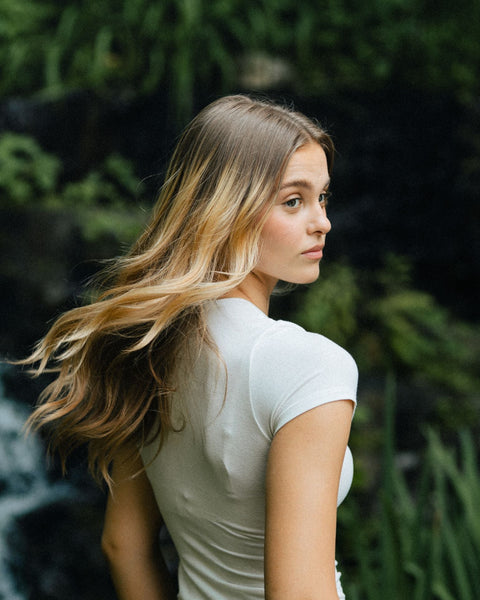
Wavy Hair Needs This, Not That
Your waves work fine in the shower. By noon, they've given up entirely. This often points to issues with your wavy hair routine.
That's a hair routine problem, and it usually starts with what you're using to wash.
Most wavy hair advice is written for the wrong person.
It's either aimed at curly hair (too heavy, wrong products) or straight hair (completely irrelevant). Wavy hair sits in its own lane, and it has its own rules.
Once you understand them, everything clicks.
That’s why we crafted Glacial Clay Pomade and Glacial Cream—both designed to work with your hair, not against it.
This is your complete hair care guide for Type 2 with its subtypes, hair routine, and styling recommendations.
Highland is a GQ Pick for Wavy Hair
GQ recently featured Highland Glacial Cream as a styling pick for Type 2 (wavy) hair in its guide to hair types. The article recommends hydrating styling products for wavy hair to help tame frizz, enhance definition, and keep natural waves looking their best.
What Type of Wavy Hair Do You Have?
🧴Wavy hair falls into three subtypes. Knowing yours means less guesswork and fewer wasted products.
2a is the loosest wave with soft S-bends that lay relatively flat. This type is the most prone to going straight with any added weight.
2b sits in the middle. More defined S-shaped waves. More frizz-prone. Most people with wavy hair fall somewhere around here.
2c is the most textured. Thicker, more voluminous waves that can almost look curly when wet. Needs more moisture than 2a, but still lighter products like a leave-in conditioner than curl types.
Not sure which you are? Check out the hair classification guide, which breaks this down without the fluff.
The type matters because product weight is everything for waves.
A cream that works beautifully for a 2c will turn a 2a to mush. And a lightweight spray that works for 2a might leave 2c a frizzy mess, highlighting the importance of choosing the right styling products.
How to Style Wavy Hair, By Subtype
Your wave subtype changes everything. That includes which products to use, how much, when, and in what order for effective hair styling.
The same cream that transforms 2c waves will make 2a hair disappear. Start here.
Styling 2A
Less is the only rule that matters. Type 2A has the softest wave pattern of all three subtypes, and it collapses fast under product weight.
One fingertip-sized amount, applied to damp (not soaking wet) hair, is all you get to work with.
The goal is to enhance the wave, not add structure. 2A does not need hold; it needs the wave to be left alone to form naturally while it dries.
Best styles: loose, natural texture. Beachy waves, effortless, undone. Let the wave do the work.
Avoid: waxes or anything with heavy oil. Even a small amount of the wrong product will pull 2A hair flat before it dries.
Volume trick: flip your hair upside down while scrunching product in. It gives roots a lift that gravity slowly takes back.
Amount rule: use less than you think you need. You can wet your hands and scrunch through again. You cannot remove product without re-washing.
Styling 2B
The most common wavy hair subtype and the most forgiving to work with. 2B has enough wave pattern to hold some product, but not so much texture that heavy stylers are required. The main challenge is frizz.
The method that works: apply product to 70-80% dry hair rather than soaking wet hair. Wet hair dilutes product and distributes it unevenly.
Letting it partially dry first means what you apply actually stays where you put it.
Best styles: textured crop, messy medium-length, side part with movement. 2B suits most men's cuts well.
Technique: warm product between palms, scrunch upward through hair rather than raking down. Air dry or blow dry with a diffuser on low heat.
Frizz control: once dry, resist touching. Every pass of fingers through drying wavy hair breaks the wave pattern and introduces frizz.
Avoid: anything labeled smoothing. This usually means silicone, which suffocates 2B definition after just a few uses
Styling 2C
The most textured wavy subtype. 2C has a thick, defined wave pattern with real volume. It’s the kind people often mistake for curly hair when it is wet, showcasing its unique hair texture.
It also has the most frizz potential of the three and the highest moisture demand, often benefiting from a weekly hair mask or deep-conditioning treatment.
Unlike 2A and 2B, 2C can handle more product (it needs it). Too little and the wave pattern becomes a frizzy cloud. The right amount keeps waves separated, defined, and controlled throughout the day.
Best styles: longer lengths where the full wave pattern can express itself. Layered cuts that add movement. Medium-length textured styles with defined separation between waves.
Technique: work in sections. 2C hair is thick enough that a single pass often misses the underlayers and leaves product applied unevenly.
Diffuse, don't air dry: 2C takes a long time to dry naturally. The longer it stays wet, the more frizz you accumulate. This is not the hair type for a quick blowout. A diffuser on medium heat, scrunching upward, sets the pattern faster.
Avoid: lightweight sprays or mists designed for fine hair. 2C absorbs them instantly without any visible hold or definition.
The Real Enemies of Wavy Hair
Most wavy hair problems come down to four culprits.
Sulfates are the biggest ones. These are the harsh detergents (SLS, SLES) in most conventional shampoos. They strip your hair of the natural oils that give waves their shape. You get the clean feeling, but the wave pattern pays the price.
Silicones create the illusion of smoothness. What they're actually doing is coating the hair shaft, blocking moisture from getting in, and causing buildup. Wave definition requires hair to hydrate properly. Silicone-coated hair can't hold a wave, as it prevents proper moisturizing.
Heavy conditioners and stylers designed for coily hair are not for wavy hair. The weight pulls waves down. If you've ever used a rich curl cream and wondered where your texture went…that's why.
Hard water is the silent one. It leaves mineral deposits that dull hair and interfere with how products perform. If you've moved cities and suddenly your routine stopped working, hard water might be it.
The Wavy Hair Wash Routine That Works
💧Wavy hair doesn't need to be washed every day, meaning fewer wash days than you might think. Most people are over-washing, and that's making the problem worse.
Every time you strip your scalp, it compensates by producing more oil. You wash again to manage the oil. The cycle continues.
Washing every 2–3 days is the sweet spot for most wavy hair types. Your scalp adjusts. Your waves stay defined longer.
How You Wash Matters Too
Use lukewarm water instead of hot. Hot water opens the cuticle and makes hair more vulnerable to damage and frizz. Focus the shampoo on your scalp, not your lengths. Let the rinse carry the cleanser through mid-lengths and ends naturally.
Scrunch but don't rub. Rubbing breaks the wave pattern and creates friction frizz before you've even started styling.
And about that lather: less foam doesn't mean less clean.
Sulfate-free formulas don't produce dense suds like conventional shampoos, but they clean. That thick lather you're used to is mostly detergent action, not cleaning power.
🛁 The Wash - Sulfate-free and pH-balanced, it cleans without stripping the natural oils your waves need to stay defined.
No transition period. No greasy adjustment phase. Works from the first wash.
Color-Treated Wavy Hair a.k.a The Double-Risk
Dyeing wavy hair is a high-stakes game.
The ingredients that strip color are the same ones that strip wave definition. Sulfates attack both simultaneously.
You can have great color or great waves, but with the wrong shampoo, you'll end up with neither.
Color-treated wavy hair needs a sulfate-free formula. Not eventually, but from the first wash after your appointment. Every sulfate wash after coloring accelerates fade and kills texture.
What to look for on the label: glycerin (moisture retention), botanical cleansers, paraben-free, silicone-free.
Sodium lauryl sulfate (SLS): avoid
Sodium laureth sulfate (SLES): avoid
Drying alcohols (ethanol, isopropyl alcohol): avoid
Glycerin: look for this
Vegetable-derived cleansers: look for this
The logic is simple. Gentle cleansing preserves color. Preserved color means fewer trips to the salon. A cleaner shampoo actually pays for itself.
At Highland, we believe great hair starts with the right care.

How to Refresh Wavy Hair on Day 2 and 3
This is the part almost nobody covers, and it's where most people lose their waves.
Day 1 is easy. You've just washed, your waves are defined, all is well. Day 2 is where routines fall apart.
The simplest refresh: Dampen hands with water. Scrunch through the mid-lengths. Let it air dry or diffuse lightly. That's it.
If your waves need more help, a small amount of Glacial Cream mixed with water in your palms works as a lightweight refresher. It adds moisture back, absorbs any oil, and revives definition without re-washing.
💡 Why Day 1 Determines Day 2
A harsh shampoo strips so much from your hair that day 2 recovery is almost impossible.
A gentler wash leaves enough moisture and natural oils that waves hold, sometimes for days.
This is why the shampoo you choose matters more than any styler you apply afterwards.
The Wavy Hair Mistakes Almost Everyone Makes
Rubbing your hair dry.
A microfiber towel or an old cotton t-shirt, scrunching only. Techniques like plopping can also help reduce frizz.
Consider a silk pillowcase for overnight protection. Terrycloth creates friction and instant frizz.
Brushing dry hair.
Waves are fragile when dry. A brush at that stage destroys them. Detangle when wet, with a wide-tooth comb and conditioner, working from the ends up.
Using too much product.
Wavy hair is not curly hair. Start with less than you think you need. You can always add. You can't subtract.
Over-washing.
Already covered, but worth repeating. Wavy hair does not need daily shampooing. It actually works better without it.
Using the wrong products for your subtype.
A 2a person using a heavy curl butter is not going to have a good time. Know your subtype. Buy accordingly.
Wavy Hair FAQs
Is wavy hair the same as curly hair?
No. They're related but distinct. Curly hair (types 3a–3c) has a tighter, more defined coil structure. Wavy hair has a looser S-pattern.
They share some hair care principles, such as sulfate-free cleansing, moisture focus, but differ on product weight and hold requirements, especially concerning the specific curl pattern.
Should wavy hair follow the Curly Girl Method?
Parts of it, yes. The sulfate-free and silicone-free principles apply directly to wavy hair.
But the full CGM was designed for curlier types, so some recommendations like heavy creams or no-poo co-washing don't translate well for most 2a or 2b subtypes.
How often should wavy hair be washed?
Two to three times per week is the general target. Some people with naturally dry hair go even less.
🙌 Pay attention to how your scalp feels. Oily at the roots, dry at the ends is a common sign of over-washing.
Can you use a styling cream on wavy hair?
Yes, but apply light. A small amount of mousse on damp hair, scrunched in, can enhance definition. Too much and it weighs the waves down.
For most 2a and 2b types, a lightweight cream is enough. Save heavier curl creams for 2c, which needs the extra moisture.
Make it Highland
Pomade
For sleek, structured styles that hold their shape.

✅ Best for: Straight hair (1B, 1C), Wavy (2A, 2B), and some Curly (3A) Hair Types
🔹 Why You’ll Love It:
• Locks in your style with a clean, medium-firm hold—without stiffness or greasiness.
• Adds a natural matte finish with just the right amount of texture.
• Keeps flyaways and frizz under control, even in unpredictable weather.
• Rinses out easily, thanks to our 9 all-natural ingredients.
💇♂️ Best Styles for Pomade:
✔ Slicked-back styles (Straight 1B, 1C)
✔ Side-part & comb-over (Wavy 2A, 2B)
✔ Pompadour or Quiff (Straight 1C, Wavy 2B)
✔ Defined curls or waves (Curly 3A)
New to it? Here's exactly how to apply pomade for the best results
Hair Cream
For effortless, touchable styles with natural movement.

✅ Best for: Wavy (2B, 2C), Curly (3A, 3B), and Coily (4A, 4B, 4C) Hair Types
🔹 Why You’ll Love It:
• Lightweight & hydrating—gives your hair that soft, natural look without the crunch.
• Enhances waves and curls, making them defined yet touchable.
• Tames frizz while keeping your hair flexible and easy to restyle throughout the day.
• Packed with nourishing ingredients to support healthy hair, keeping it strong, vibrant, and looking its best.
💇♂️ Best Styles for Styling Cream:
✔ Messy, textured waves (Wavy 2B, 2C)
✔ Soft, natural curls (Curly 3A, 3B)
✔ Defined, moisturized coils (Coily 4A, 4B, 4C)
✔ Medium-length, effortless styles for a relaxed, lived-in look.
Not sure which to pick? Blend them. Use the Cream first to hydrate and define, then finish with a small amount of Pomade for added structure and hold. Best of both worlds.
Want Only the Best for Your Hair?