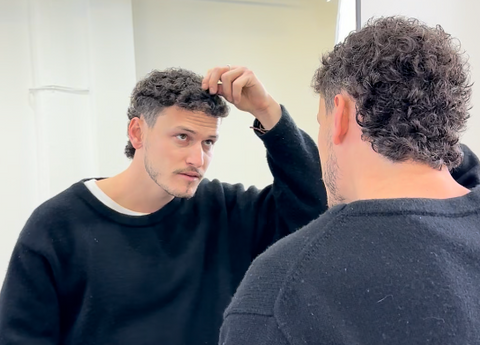
Perm Mullet: How to Get the Texture Without the Regret
A perm mullet doesn't fail in the barber chair. It fails two weeks later when you're staring a frizzy, shapeless hair, opens in a new tab, wondering what went wrong.
Most content shows you what a permed mullet hairstyle looks like. This one explains how it behaves.
You've seen the photos. The texture. The effortless movement. But nobody talks about shrinkage, curl drop, or what happens when you wash it wrong.
This guide covers what actually matters: whether you should do it, what to ask for, and how to keep it looking intentional (not accidental).
The Reality Check
Most , opens in a new tabmodern mullet haircuts with perms look incredible on day one. By day fourteen? Different story.
There are two main ways this mullet style fails.
Hair damage
Chemical processing on hair, opens in a new tab¹ that wasn't ready for it. Dryness, breakage, hair texture that feels like straw.
This usually comes down to porosity (how your hair absorbs moisture) and elasticity (whether it stretches and bounces back or just snaps).
Messy over time
Curls loosen unevenly. The shape drifts. What started as "textured and modern" turns into "confused and unkempt."
Neither failure happens because the stylist messed up. They happen because nobody explained what comes after.
That's the gap this guide fills.
Should You Get a Perm Mullet?
Not everyone should.
And that's not a cop-out—it's the fastest way to save you money and regret.
When a curly mullet works
Want texture but hate heat styling
Have naturally straight hair or slightly wavy hair, opens in a new tab that feels flat
Are okay with a maintenance routine (not complicated, but consistent)
Understand your hair will look different, not just "better"
When to pause
Your hair doesn't hold curls from a curling iron for more than a few hours
You've bleached or heavily processed your hair in the last 6 months
You hate styling products, opens in a new tab or won't use them
You're not long enough yet (more on this below)
Quick gut check
🧴If your current hair routine is "shampoo and air dry," a mullet perm will force you to level up. Not dramatically, but you can't ignore it either.
If that sounds exhausting, this might not be your move.
Hair type reality
Fine hair and thick hair behave differently after perming. Fine hair tends to drop curls faster…sometimes within weeks.
Thick hair holds texture longer but needs more weight removal in the cut to avoid looking bulky.
Face shape matters too. Perms add volume, which can balance longer faces but overwhelm rounder ones.
"Am I Long Enough to Perm?"
This is the question everyone asks. And the answer is more complicated than "yes" or "no."
Here's the part people gloss over: curls shorten your hair. A lot.
A perm pulls length up into the curl pattern. Depending on how tight you go, you could lose 2–4 inches of visible length.
So "long enough to perm" doesn't mean "long enough to look good after perming."
General rule
If you want the back of your mullet haircut to still look long after the perm, you need more length than you think. Add at least 3–4 inches to whatever you're picturing.
If you're borderline? Wait. Seriously.
Growing your long hair another 4 months is annoying. Paying for a perm you hate is worse.
A medium mullet, opens in a new tab is often the ideal starting point before adding a perm.
Length shrinkage reality
Loose perm / beach wave = ~20% length loss
Medium curls = ~30% length loss
Tight curls / ringlets = ~40%+ length loss
If your mullet barely touches your collar right now, a medium perm will put it above your ears. Know that going in.
What to Ask Your Stylist (The Script)
Walking into a barbershop or salon and saying "I want a perm mullet" is like ordering "food" at a restaurant. You'll get something. It might not be what you wanted.
Here's how to actually communicate what you're after.
Step 1: Show a reference photo
Point to specifics:
"I want this length in the back, not shorter."
"See how the curls are loose, not ringlets? That's what I'm after."
"I want texture, not volume."
Step 2: Use these phrases
Copy these. Bring them on your phone if you need to.
"I want waves, not curls. Beach texture, not poodle."
"I want the back to keep its length—avoid curl-under at the ends."
"Can we do a partial perm? Just the back and crown, not the sides."
"What rod size would give me loose movement without tight spirals?"
Step 3: Understand rod sizes
Large rods = loose waves, minimal shrinkage, subtle texture
Medium rods = defined S-waves, noticeable curl, moderate shrinkage
Small rods = tight curls, ringlets, maximum shrinkage
Most modern mullet styles use large or medium rods. If your stylist defaults to small rods without asking, speak up.
Step 4: Ask about their perm experience.
Not all stylists do men's perm services regularly. You want someone who perms hair weekly, not someone dusting off a technique from cosmetology school.
Full Perm vs. Partial Perm
A full perm processes your entire head. For most fade mullet cuts, that's overkill. The sides are usually short enough that perming them just adds puff—especially if you're pairing with a taper fade, high taper, or undercut.
The classic old school mullet, opens in a new tab shape works well with a partial perm.
✨A partial perm (back and crown only) keeps the silhouette clean while adding texture where it matters.
How Long a Perm Mullet Actually Lasts
"How long will it last?" is the wrong question.
The right question: "How long will it look good?"
Week 1–2
Curls are tight. Maybe tighter than you expected.
This is when you follow the 48-hour rule—no washing for at least two days post-perm. The neutralizer needs time to fully set the new curl pattern.
Week 3–4
Curls start relaxing. This is usually when people say, "Okay, now I get why I did this." Loose, natural, lived-in vibes.
But frizz risk increases if you're not managing moisture.
Week 6–10
The perm is loosening noticeably. Curl relaxation is normal. Some sections will soften faster than others.
If you've been maintaining it well, you get soft waves with good movement. If not? Uneven texture and a shape that looks tired.
Month 3+
Most perms are mostly grown out by now.
You'll notice a demarcation line where your natural texture meets the permed ends. You're looking at a trim or a re-perm decision.

The Maintenance System
You don't need ten products. You need the right approach.
Washing frequency
Over-washing kills curl definition. Sulfates strip the oils that keep texture cohesive.
Every 2–4 days is the sweet spot for most textured mullet styles. On non-wash days, rinse with water and re-style with a light product.
Clarifying shampoo cadence
Even with sulfate-free washing, product buildup happens. Use a clarifying shampoo, opens in a new tab every 2–4 weeks to reset.
Conditioning logic
Permed curly hair needs moisture. But too much softening can weigh curls down and make them limp.
Look for lightweight hydration. A leave-in conditioner for curly hairstyles, opens in a new tab works well—just don't overdo the amount.
The protein vs. moisture balance
Hair feels mushy or overly soft? You need protein.
Hair feels dry, straw-like, or brittle? You need moisture.
Drying matters
Skip the terry cloth towel—it creates frizz. Use a microfiber towel or cotton t-shirt to scrunch out excess water.
If you're using a blow dryer, attach a diffuser and keep it on low heat, low airflow. Air drying works fine too, just don't touch it while it dries.
Styling principle: define, don't grease
A clay-based or cream-based product gives you definition and movement without shine or stiffness. Work it through damp hair, scrunch lightly, and let it air dry or diffuse.
If you work in a professional environment, check our corporate mullet guide, opens in a new tab for styling tips
Where Highland fits
If you're committing to this hair transformation, the products you use matter more than people admit.
🧴The Glacial Cream, opens in a new tab works well here—light hold, matte finish, conditions without flattening. Apply to damp hair, scrunch, and leave it alone.
🧴For days when you need more control, layer with Glacial Clay Pomade, opens in a new tab. The clay absorbs oil and adds texture without crunch.
Common Regrets (And How to Avoid Them)
Regret #1: "It's way shorter than I expected."
What happened: Shrinkage wasn't accounted for.
How to prevent it: Be explicit about final length. Say: "I want the back to hit here after the perm." Point to your neck or collar.
Regret #2: "It looked great, then got messy."
What happened: No maintenance plan. Washing too often, skipping product, letting frizz take over.
How to prevent it: Commit to the routine before you sit in the chair. I've seen guys nail the look for three weeks, then completely abandon ship because they didn't want to buy a diffuser. Don't be that guy.
Regret #3: "My hair didn't hold the curl."
What happened: Some hair types resist perming. Super fine hair or hair that's naturally resistant can drop a perm fast.
How to prevent it: Ask your stylist about a strand test before committing. Non-negotiable if you have fine hair or any chemical history.
Regret #4: "It damaged my hair."
What happened: Perm solution + already-compromised hair = breakage.
How to prevent it: Be honest about your hair history. If you've bleached, relaxed, or heavily heat-styled in the last year, tell your stylist.
FAQ
Can I perm just the back of my mullet?
Yes. A partial perm targets the back and crown while leaving the sides alone. For most fade mullet hairstyles (especially those with a taper fade), this looks better than a full perm.
What's the difference between a perm mullet, shaggy mullet, and wolf cut?
A shag is a cut with lots of layers and textured ends. A wolf cut combines shag layers with mullet length. A permed mullet adds chemical texture to the back and crown.
They're different hairstyles that can overlap.
Explore all mullet variations in our types of mullets guide, opens in a new tab.
Does a perm mullet damage hair?
It's a chemical process, so there's always some stress. The solution breaks and reforms bonds in your hair shaft.
That's how curl happens. Healthy, unprocessed hair handles it well.
Is it better to wait and grow more length first?
If you're on the fence about length, yes. You can always perm later. You can't un-perm if you hate the result.
How often should I trim a wavy mullet?
Every 6–8 weeks to maintain the shape and remove split ends. Perm hair is more fragile at the ends.
Final Word
A modern mullet with a perm can look incredible: textured, trending, effortless.
But "effortless" doesn't mean "no effort." It means the effort is invisible.
If you're ready to adjust how you wash, style, and maintain your men's hair, go for it. Bring this guide. Use the script. Set expectations with your stylist before they touch a rod.
If you're not ready? Wait. Build more length. Get your baseline hair health dialed in first.
And if you do commit, don't wing the maintenance. The routine is what separates "intentional texture" from "what happened to your hair?"
🌱The products you use post-perm matter.
💧The Wash, opens in a new tab — sulfate-free, gentle on texture, no greasy transition phase.
🧴 Glacial Cream — lightweight hold, matte finish, defines without crunch.